September Pulse – What’s Pulsing in DA Practice & Policy
Welcome to September’s NCDV Pulse Newsletter, our bi-monthly round-up of what’s happening across the domestic abuse sector, inside NCDV, and in the wider world of practice and research.
September often brings a sense of returning to routine. Summer is beginning to wind down, diaries are filling up again, and many services are turning their attention to the busy months ahead. It feels like a good time to reconnect, reflect on what has changed, and share some useful ideas for the months to come.
This edition’s five pulses
Pulse 1: An insight from our frontline or training rooms
Pulse 2: Training opportunity to strengthen practice
Pulse 3: A brief update from inside NCDV
Pulse 4: Research, evidence or something worth sharing
Pulse 5: Something to aid reflective practice and carry back into your work
Pulse One: Insight from Our Frontline or Training Rooms
Emergency Alerts and Hidden Phones

On 14 August, millions of phones across England and Wales sounded an emergency alert warning of the very high risk of wildfires.
Emergency alerts are an important public safety tool. They are designed to reach people quickly when there is a serious risk to life, and recent wildfires have demonstrated just how rapidly an emergency can develop. However, the alert also highlighted an important safeguarding issue for victims of domestic abuse.
We know that some people keep a second or hidden mobile phone as part of their safety plan. It may be their only safe way to contact friends, family, specialist services or the police without an abuser knowing. Emergency alerts can cause a phone to make a loud siren-like sound and vibrate, even when the device is set to silent.
Following the wildfire alert, domestic abuse organisations raised concerns that there had been no advance warning for frontline services, potentially leaving people with hidden phones unable to take precautions. At the time of writing, the alert has been the subject of many conversations and how we, as professionals, can help people stay safer.
Advance notice is helpful wherever it is possible, but there is a wider lesson here. Real emergencies will not always come with advance warning. Flooding, fires, severe weather or other incidents could trigger another alert at any time.
That means alerts should become part of routine digital safety planning. If someone is keeping a phone hidden from an abusive person, we should talk to them about the possibility of emergency alerts and, where appropriate, help them understand how alerts can be disabled on that particular device.
A useful addition to your safety planning
We have updated our NCDV Digital Safety Quick Guide to include information about emergency alerts and hidden phones in line with Government guidance.
Download the guide here.
Our Quick Guides are designed to be phone-friendly, practical and easy to share directly with the people you support.
Find the full range of our guides, here.
Sometimes, the smallest detail in a safety plan can make an enormous difference.
Pulse Two: Training Opportunity or Resource
Faith, Spirituality & Domestic Abuse

In Pulse Two we offer a free webinar, training session or resource. This section is always popular with our readers.
After being involved in recent discussions around faith and belief-related abuse, we decided to develop a comprehensive and downloadable resource. It will be useful for those who are unfamiliar with his type of abuse, or those who may not have had the opportunity to undertake training. It might also be useful for busy trainers or managers who can add it as a resource to training sessions or inductions.
This type of abuse is not restricted to closed religions or cultural practices but can affect anyone of any background. Any belief we hold, about almost anything, has the potential to be weaponised and used against us. Spiritual or faith-based beliefs are no different.
Download here.
The resource is designed to:
- Slip into your training or induction materials as a standalone handout.
- Provide further information or signposting options.
- Create discussion during supervision or reflective practice.
- Provide context during multi-agency discussions.
- Remind us of the layered reality of domestic abuse and the victim-survivor experience.
We have begun to build a library of resources to support learning and reflective practice which can be found here.
Pulse Three: NCDV Internal News
What did we see during the World Cup?

There has been considerable discussion this summer about increases in domestic abuse incidents and help-seeking during the FIFA World Cup. NCDV has participated in high-profile campaigns in the past and regularly puts out content to raise awareness.
During this tournament, however, our referral data showed a more complicated picture.
Referrals had already been rising gradually in the weeks before the tournament began. That increase continued throughout the World Cup, but referrals did not fall back once the tournament ended. Several weeks later, they remain higher than we would normally expect.
This means we cannot say with confidence that the World Cup itself caused the increase.
There are also other factors to consider. The tournament took place during a period of very warm weather, which has previously been associated with increased domestic abuse risk. It also overlapped with the time when families are planning childcare arrangements for the school holidays, and we have the relentless financial pressure from the cost of living, all of which can increase risk or intensify existing patterns of abuse.
It is also important to remember that NCDV referral data reflects people seeking or being referred for legal protection. It does not provide a direct measure of the overall level of domestic abuse in the community.
What can we conclude?
Major sporting events may create conditions in which existing abuse escalates, but our data suggests that the picture is unlikely to be explained by one event alone.
What we are seeing is a sustained increase in people being referred for a civil protection order, beginning before the World Cup and continuing well beyond it.
Rather than trying to attribute that increase to a single cause, the more important message may be that domestic abuse is shaped by a combination of pressures and circumstances. Practitioners should remain alert during high-profile events, periods of extreme weather and other times of increased household stress, while recognising that the risk does not necessarily disappear when the event itself is over.
We will continue to monitor referral patterns over the coming months.
Pulse Four: New Research or Resource
What makes a good response when someone seeks help?
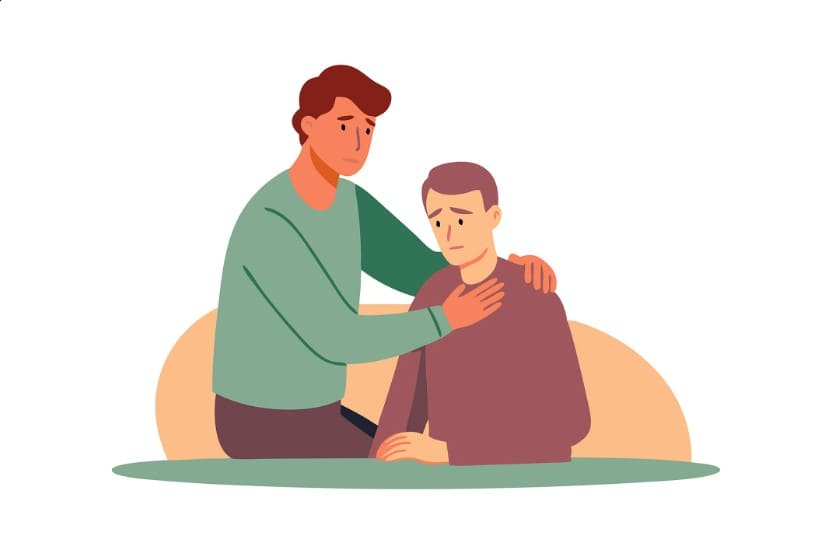
A recent study from researchers at the University of Birmingham and Aston University explored how domestic abuse survivors experienced seeking help from the police and specialist support organisations in England.
The study was small, involving in-depth interviews with six survivors, so the findings should not be taken as representative of every survivor’s experience.
However, the themes that emerged offer a useful reminder about what can make the difference between someone feeling supported and feeling even more vulnerable.
Researchers identified four main themes:
- Being understood, believed and cared for
- Good communication between survivors and services
- A rapid, meaningful and victim-centred response
- Recognition that individual circumstances can affect opportunities to seek help
Participants described experiences of being dismissed, disbelieved or not fully understood. These responses could increase feelings of vulnerability and make seeking further help more difficult. In contrast, survivors described empathetic, timely responses as validating and reassuring, helping them to feel safer and more confident about engaging with services.
What does this mean for practice?
Much of our work is understandably focused on what intervention or support someone needs: a referral, safeguarding response, legal protection, housing advice or practical help.
This research is a useful reminder that how that support is delivered matters too. We can all get carried away sometimes with providing the what rather the how.
Listening carefully, communicating clearly, responding promptly and demonstrating that we believe and understand someone may appear to be simple things, but they can fundamentally shape a survivor’s experience of seeking help.
For practitioners, perhaps the question to carry away is:
When someone reaches out to us, do they leave the interaction feeling more understood, more believed and more supported than when they arrived?
Read the full open-access paper here.
Gander-Zaucker, S. et. al (2026) ‘The Help-Seeking Experiences of Domestic Abuse Survivors in England: Insights from the Research Phase of an Experience-Based Co-Design Study’, Soc. Sci. 15(4), 239.
Pulse Five: Reflective Practice
Take your reflection outside

Reflective practice does not always have to happen in a meeting room, supervision session or notebook.
Research suggests that spending time in nature can help people psychologically detach from work, reduce fatigue and support recovery after a demanding day. Even relatively short periods outdoors may help us shift attention away from work and towards something calmer and less emotionally charged.
Research example
A workplace study found that employees who took 15-minute lunchtime walks in a park experienced better concentration and less fatigue later in the working day. The findings suggest that even a short period in a natural environment may support recovery during the working day.
Read the paper here.
Sianoja, M. et. al (2018) ‘Enhancing daily well-being at work through lunchtime park walks and relaxation exercises: Recovery experiences as mediators,’ J Occup Health Psychol. 2018 Jul;23(3):428-442. doi:10.1037/ocp0000083
For people working in the domestic abuse arena, that matters. Listening to fear, trauma and crisis can leave us carrying the emotional weight of other people’s experiences long after the conversation has ended. Getting outside will not solve burnout, excessive workloads or inadequate organisational support, but it can provide a useful pause.
That might mean:
- Taking a short walk through a park or green space
- Gardening or tending plants
- Sitting outside with a drink
- Eating lunch away from your desk
- Spending time near trees or water
- Simply noticing birdsong, clouds, plants or the changing seasons
You may also have heard of forest bathing, or shinrin-yoku. Despite the name, no bathing is involved. It simply means spending slow, attentive time in a natural environment, noticing what you can see, hear, smell and feel.
Try this:
- After a particularly demanding piece of work, spend ten minutes outside if you can, before the next task or your commute home.
- Don’t make a call. Don’t check your emails. Don’t use the time to plan upcoming work.
- Walk, sit or simply notice what is around you.
Then ask yourself:
Do I feel any different from when I stepped outside?
Sometimes, reflective practice is not about thinking harder about what we have just experienced. Sometimes it is about giving our minds somewhere else to go.
And finally…
As summer begins to wind down and routines start to settle again, this can be a good moment to check in with ourselves as well as our colleagues.
Domestic abuse work asks a great deal of professionals. It requires attention, judgement, empathy and, sometimes, the ability to carry difficult stories through the rest of the working day. Small opportunities to pause, reflect and reset really do matter.
Thank you, as always, for the care, patience and professionalism you bring to this work. We hope this edition of NCDV Pulse has given you something useful to think about, share with your team, or carry back into your own practice.
Until next time, take care of yourselves and each other.