National Centre for Domestic Violence Logo

Please note that Internet Explorer is no longer a supported browser so we cannot guarantee the integrity of our website when using it. Please use an alternate browser like Edge or Chrome.

Access ASSIST Online Injunction Database

Click here to leave training feedback

-or-

Make a Referral Using the Form Below:


    YesNo


    YesNo
    *Fields required. By submitting a referral you agree to receive updates on the progress of your referral, as outlined in our Privacy Policy.

    In Loving Memory of Sharon Bryan
    Reading Time: 2 minutes

    In Loving Memory of Sharon Bryan

    emblem

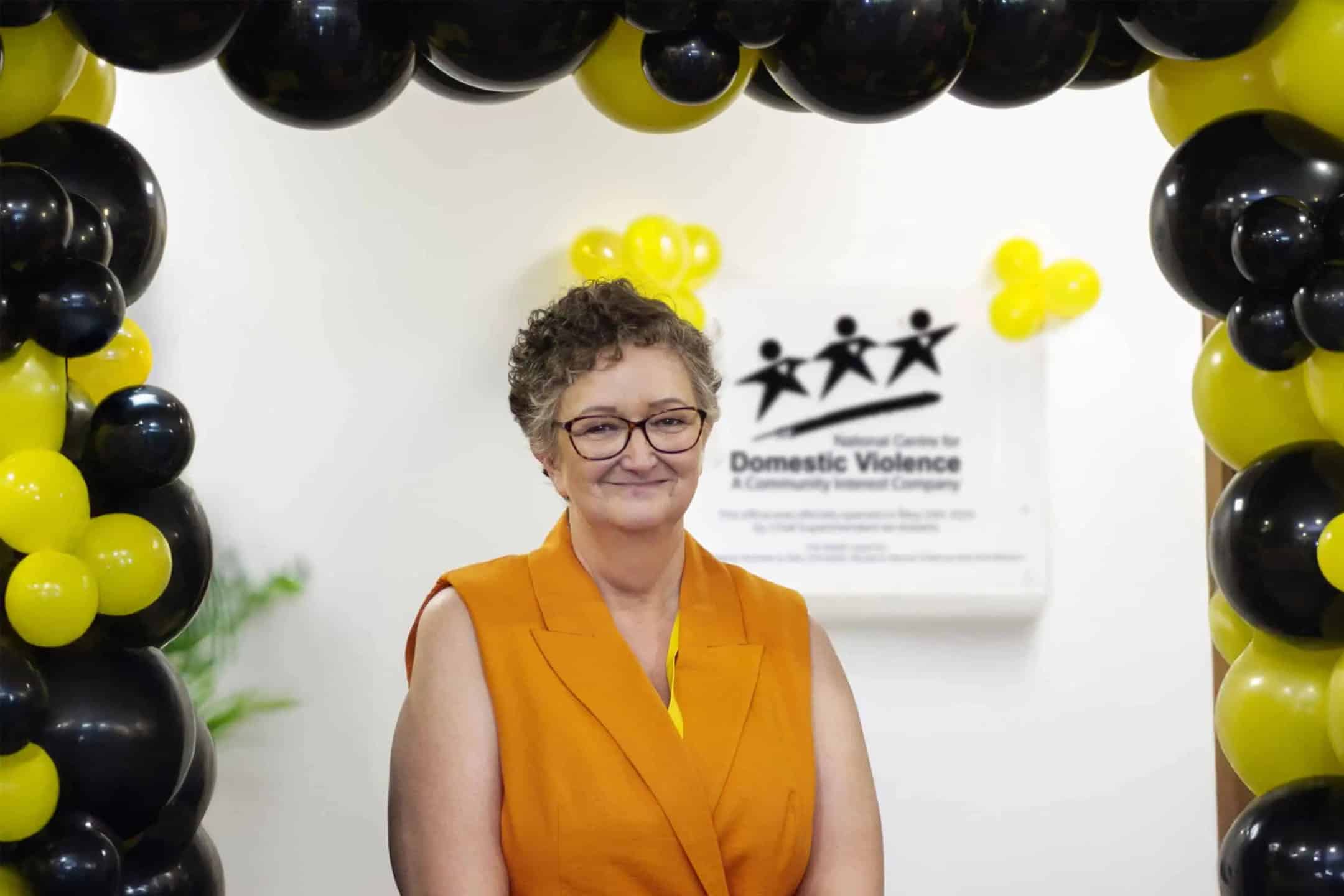
    We are deeply saddened to announce the passing of Sharon Bryan, a courageous survivor of domestic abuse and a tireless campaigner for the rights of victims and survivors across England and Wales. Sharon passed away peacefully surrounded by her family, leaving behind a legacy of compassion, strength, and unyielding commitment to social justice.

    Sharon’s journey from survivor to advocate was born of profound personal experience, which she transformed into a vocation for helping others. Over nearly three decades, she dedicated her life to supporting those trapped in abusive relationships, guiding them toward safety, legal protection, and a path to reclaim their dignity.

    As Head of Partnerships and Development for the National Centre for Domestic Violence (NCDV) and through her own initiative, Sharon Bryan Consultancy, she built bridges between survivors, support services, and legal systems. She combined personal empathy with professional expertise, serving as an Independent Domestic Violence Advocate, trainer, expert witness, mentor, and public speaker, always with one overarching goal: to make safety and justice accessible to all who needed them.

    Her work touched thousands. She worked tirelessly to set up new refuge services, advocating for domestic abuse courts, and supervising multi-agency interventions. She helped shape support frameworks that have offered hope to countless survivors. Many have spoken of her as their “rock of strength”, someone who believed in them when they could hardly believe in themselves.

    Sharon’s contributions were formally recognised with several honours, including “Survivor of the Year” awarded by Women’s Aid Federation of England (in partnership with Avon and Marie Claire) and being named among the top 100 women in social enterprise in the NatWest WISE100 list for 2023.

    Beyond accolades, what truly defined Sharon was her heart. The fierce compassion she showed to survivors, her unshakable belief in the possibility of change, and her readiness to stand up publicly against injustice. She challenged societal norms, spoke truth to power, and always reminded others: there is no excuse for domestic abuse.

    To her colleagues, peers, and those she helped, Sharon was more than an advocate, she was a beacon of hope, integrity, and resilience. Though she is no longer with us, the structures she helped build, the lives she changed, and the hope she inspired will endure.

    We extend our deepest condolences to her family, friends, and everyone who was fortunate enough to know and be supported by her. Sharon’s legacy will continue to guide and inspire us in the fight against domestic abuse.

    Here at NCDV we will recognise her years of commitment to the sector by renaming our annual pro-bono internship programme, as the “Sharon Bryan Internship Programme”.

    May she rest in peace – her work lives on.

    Share This Article

    Reading Time: 3 minutes
    Reading Time: 3 minutes
    Reading Time: 5 minutes

    By Fiona Bawden, Times Online (8th May 2007)

    “Steve Connor, a student at City Law School, is a man on a mission. Six years ago he was a fairly directionless 27-year-old. Today, as well as taking the Bar Vocational Course, he is chairman of the National Centre for Domestic Violence, a ground-breaking organisation that he dragged into existence after a friend could not get legal help to protect her from an abusive partner.

    Connor’s route to the Bar has been circuitous. In 2001 he returned from a year in Australia (he says that he would not dignify describing it as a gap year), and took a job as a process server in South London. The job (“I just saw it advertised in the paper”) was not quite as dull as it sounds. On one occasion he was threatened with a machete, on another, he was nearly stabbed by a man he had arranged to meet on Clapham Common to serve with a non-molestation order: “He’d seemed really friendly on the phone…”

    The turning point in his life came when a friend, who was being abused by her partner, turned to him for support. Connor went with her to the police. She did not want to press criminal charges so the police suggested that she visit a solicitor to take out a civil injunction. “We must have seen 12 solicitors in a morning. We just went from one to the next to the next to the next. Everyone was very eager to help until we sat down to fill in the forms for the legal aid means test,” he says. The woman, who had a small child, did not qualify for public funding. But, Connor says, her financial situation as it appeared on paper did not bear any relation to her financial situation in reality. “She had a part-time job and she and her partner owned their home. Yet she didn’t have any money. Her boyfriend was very controlling and controlled all the money; he kept the chequebooks and didn’t let her have access to the bank account.”

    The injustice of the situation got under Connor’s skin. “I just couldn’t believe that there was no help available to people who did not qualify for public funds but could not afford to pay.

    I just kept feeling that this must be able to be sorted if only someone would address it.”That “someone” turned out to be him.

    In 2002, thanks entirely to Connor’s doggedness, the London Centre for Domestic Violence was formed. It started out with him and a friend, but is now a national organisation, covering 27 counties, and has helped approximately 10,000 victims last year to take out injunctions against their partners.

    NCDV now has nine full-time staff, 12 permanent volunteers and has trained over 5000 law and other students as McKenzie Friends to accompany unrepresented victims into court. We have also trained over 8000 police officers in civil remedies available regarding domestic violence. The National Centre for Domestic Violence (NCDV) has branches in London, Guildford and Manchester and is on track to have branches in 16 areas within the next two years.

    NCDV specialises exclusively in domestic violence work and could be characterised as a cross between McDonald’s and Claims Direct. The high degree of specialisation means that its processes are streamlined: clients can be seen quickly and the work is done speedily and cheaply. “Sometimes, we will have one of our trained McKenzie Friends at a court doing 10 applications in one day,” Connor says.

    Clients are not charged for the service. NCDV staff take an initial statement: clients who qualify for legal aid are referred to a local firm; those that don’t get free help from the centre itself. It runs on a shoestring, heavily reliant on volunteers and capping staff salaries at £18,000 a year.

    Steve expects to qualify as a barrister this summer and hopes that having a formal legal qualification will give the centre added clout. “We are already acknowledged as experts and consulted at a high level, so I thought it would be helpful if I could back that up by being able to say I’m a barrister,” he says. He is just about to complete a one-year full-time BVC course at the City Law School (formerly the Inns of Court Law School) and, all being well, should be called to the Bar in July. Although Connor sees his long-term future as a barrister, he says that he has no immediate plans to practise. “I want to get NCDV running on a fully national level. Then I may take a step back and have a career at the Bar.”